If you’ve ever stood in front of a running coating machine—whether it’s applying a protective layer to aerospace aluminum, a conductive film to touchscreen glass, or a decorative finish to household plumbing fixtures—you know that one tiny inconsistency can ruin an entire batch of parts. When I’m on a client’s production floor, troubleshooting a new line or training their team on our equipment, the question I get asked most often isn’t “How fast does this run?” or “What’s the maximum width it can coat?” It’s: “What’s the coating thickness accuracy I can actually get from this machine?” Coating Machine
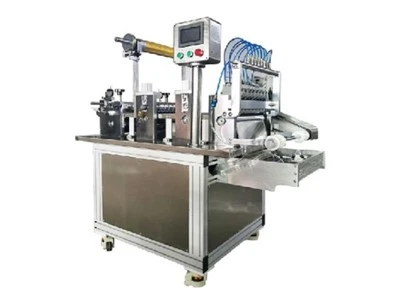
This is one of those questions that sounds simple on the surface, but it’s layered with context, variables, and tradeoffs that change everything from a project’s bottom line to its long-term performance. I don’t just give a one-number answer when I talk to a client—I walk through what affects accuracy, what that number really means for their specific product, and how we design our coating machines to hit that target reliably. Let me break this down the way I do for every new customer, straight from the shop floor where I’ve tested hundreds of these systems over the last 12 years.
First, let’s clarify a key term people mix up all the time: coating thickness accuracy vs. coating thickness precision. Accuracy is how close your measured thickness is to your target, right? If your spec says you need 15 microns and you’re getting 14.8, that’s accurate. Precision is how consistent those measurements are across the entire part, or across a full production run. You can have one without the other—for example, a machine that drifts by 2 microns every 10 parts might be precise if the drift is steady, but it’s not accurate. Or a machine that bounces between 12 and 18 microns on each part is accurate on average, but terrible for precision. At our company, we build our machines to deliver both, because a batch that’s accurate on average but has 5 microns of variation across a single panel is useless for most high-stakes applications.
Now, what factors impact both accuracy and precision? Let’s start with the coating method, because that’s the biggest driver. Not all coating technologies are created equal, and each has its own inherent limits. For example, if you’re using a dip-coating machine—where parts are dipped into a tank of coating material and pulled out at a controlled speed—accuracy is heavily dependent on pull rate, liquid viscosity, and how evenly the part is withdrawn. A dip coater can get accuracy within ±5% of your target if it’s calibrated properly, but that drops to ±10% if the viscosity of your coating changes 10% mid-run, which happens all the time as solvent evaporates or material ages. Contrast that with a precision roll-to-roll (R2R) slot-die coater, which is used for flexible electronics or solar cell films. Slot-die coating works by extruding a precise, narrow bead of coating material through a die head onto a moving substrate. The best industrial slot-die systems we’ve built have accuracy as tight as ±1% of target thickness for continuous roll coating, which is unheard of for many older coating methods. But that number only holds if you’re running a uniform, flat substrate—if the web has wrinkles or stretches unevenly, that accuracy goes out the window fast.
Then there’s substrate preparation. You can have the most accurate die head in the world, but if your incoming part has a rough surface, or leftover residue from a previous process, the coating will sit unevenly, skewing thickness measurements. I had a client in the automotive industry a few years back who was trying to coat polymer trim pieces with a clear UV finish. Their first run came back with an average thickness of 12 microns, but the spec required 15. When I went to their floor, I realized they were skipping the plasma cleaning step before coating. The trim had tiny oil residues from the molding process that made the coating bead break up in spots, so the machine was depositing less material where the residue was present. Once we added an in-line plasma cleaner, their average thickness jumped to 14.7 microns, within ±2% of their target. That’s a perfect example of how equipment only works as well as the upstream processes around it.
Next, control system calibration. Our coating machines aren’t just mechanical devices—they’re packed with sensors and software that adjust for real-time variables. We use laser thickness gauges mounted right after the coating applicator, which measure thickness hundreds of times per second and send data back to the machine’s PLC (programmable logic controller). That PLC then adjusts the speed of the die, the flow rate of coating material, or the tension on the substrate to correct deviations before they become a problem. But calibration isn’t a one-time step when we install the machine. I always tell clients that we do a full calibration at our factory, but they need to recalibrate monthly, or after every roll change for R2R systems, or if they switch to a new lot of coating material. I had a solar panel manufacturer client who switched from a solar cell ink from Supplier A to Supplier B without recalibrating their slot-die line. The new ink had 8% higher viscosity, so even though they set the flow rate to match the old ink, the actual deposited thickness dropped by 10 microns across their 2-meter-wide panels. That cost them a full day of production to fix, and it was 100% avoidable.
Environmental conditions are another hidden factor that people rarely account for. Coating material viscosity changes with temperature—for every 1°C shift, solvent-based coatings can change viscosity by 2-5%, which directly changes how much material is deposited. Humidity can also mess things up: for water-based coatings, high humidity slows down solvent evaporation, leading to uneven wet coating that can pool or sag before it cures. That’s why all our high-precision coating machines come with in-line environmental control systems that regulate temperature to within ±0.5°C and humidity to within ±2% RH. For clients who run in uncontrolled environments, we offer optional enclosures that seal the coating area and keep conditions stable. I once worked with a small aerospace parts shop that was getting inconsistent thickness on their titanium aircraft components during the winter, when their factory dropped 3°C overnight. Adding a portable environmental enclosure to their existing spray coater fixed the issue, cutting their thickness variation from ±8% to ±3%.
Now, let’s get to the numbers, because that’s what everyone really wants. For general-purpose coating machines, the ones we sell to small manufacturers, auto parts shops, or hobbyist lines, accuracy typically ranges from ±5% to ±15% of target thickness. These are machines built for versatility, not the tightest tolerances—they work great for applying primers, protective coatings, or decorative finishes where a little variation doesn’t cause performance issues. For example, a furniture maker coating cabinet doors with a semi-gloss finish might be fine with ±10% accuracy, as long as the finish is even and durable.
For mid-range industrial coating machines, aimed at medical devices, consumer electronics, or automotive components, accuracy jumps to ±2% to ±5%. These machines have better control systems, precision applicators, and often include basic environmental control. A client coating catheter balloons, which need a uniform drug coating to deliver the right dose to patients, needs to hit thickness within ±3% to be FDA-compliant—our mid-range line is standard for that application across 20+ catheter manufacturers in the US and Europe.
Then there’s high-precision coating, for aerospace, semiconductors, and flexible electronics. For these applications, accuracy is often ±1% or less. When I helped a semiconductor client set up a line to coat photoresist wafers, their spec required a thickness of 1.2 microns, with accuracy within ±0.01 microns. That’s a 0.8% accuracy rate, only achievable with our ultra-high-precision slot-die coater, combined with a Class 100 cleanroom environment and real-time thickness feedback loops. Getting that kind of accuracy isn’t cheap, but for products where a tiny thickness difference can lead to a failed component, it’s non-negotiable.
I always emphasize to clients that the “best” accuracy number isn’t always the right one for their needs. If you’re over-specifying a machine with ±1% accuracy when you only need ±5%, you’re wasting thousands of dollars on features you’ll never use. That’s why we do a free application review for every potential customer—we ask about their product, their spec, their production volume, and their environment, then recommend a machine that hits exactly what they need, no more, no less.
Let me wrap this up with a real story that drives this home. Last year, a startup making flexible sensors reached out to us, frustrated because their current coating machine was giving them ±12% thickness variation, which was making their sensors perform inconsistently. They thought they needed a $200k ultra-high-precision slot-die system to fix the problem. When I visited their lab, I found their main issue was that their substrate was stretching 4% as it moved through the coater, so their laser thickness gauge was measuring thickness at the edge of the web, which was stretched thinner than the center. We adjusted the tension control system on their existing R2R coater, added a single laser gauge that measures thickness across the entire web width, not just the edges, and recalibrated the flow rate to account for substrate stretch. Their thickness variation dropped to ±3%—well within their spec—for less than $20k, a tiny fraction of what they’d planned to spend. That’s the kind of solution we focus on: solving the actual problem, not just selling a higher-number accuracy rating.
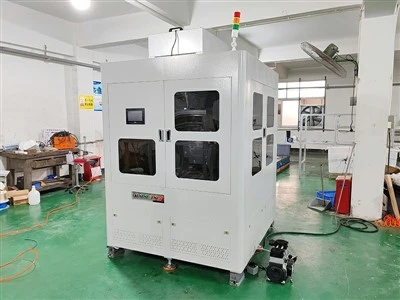
At the end of the day, coating thickness accuracy isn’t a static number stamped on a spec sheet. It’s a combination of your machine’s design, the materials you use, the processes around it, and how you maintain and calibrate everything. If you’re looking to upgrade your coating line, or you’re tired of dealing with inconsistent thickness ruining your parts, I’m here to help. We work with clients across every industry, from small startups to large multinational manufacturers, to build coating machines that hit their exact accuracy needs, without overcomplicating things. Reach out to our team to discuss your application, and we’ll walk through the best options for your production goals.
Laboratory Equipment References
- Physical Vapor Deposition: Principles and Practice, John Wiley & Sons, 2007
- Slot Die Coating for Manufacturing: A Practical Guide, Society of Manufacturing Engineers, 2019
- Coating Technology for Medical Devices, ASM International, 2015
- Industrial Control Systems for Precision Coating, CRC Press, 2021
Dongguan Innate Intelligent Technology Co., Ltd.
With abundant experience, we are one of the most professional coating machine manufacturers in China. With a professional production team, we are able to meet the needs of the majority of our customers. Please feel free to buy advanced coating machine made in China here from our factory. Customized orders are welcome.
Address: Room 201, Building 4, No. 92, Fenghuang Road, Dalingshan Town, Dongguan City, Guangdong Province
E-mail: 13316631159@163.com
WebSite: https://www.getinnater.com/
