If you’ve ever stood in a newly built home or a commercial space gutted for renovation, the question of wall durability almost always takes center stage. As a wall fabric supplier, I’ve talked to architects, contractors, homeowners, and business owners who all ask the same thing: How does my product stack up against other common wall coverings? Drywall paint, wallpaper, vinyl wall panels—each has its reputation for longevity, wear, and upkeep, but wall fabric often flies under the radar until someone needs a solution that doesn’t just look good, but holds up over years of daily use. Let’s break this down with real-world data, hands-on experience from jobs I’ve supported, and the kind of durability testing that actually matters for people paying to protect their walls. Wall Fabric
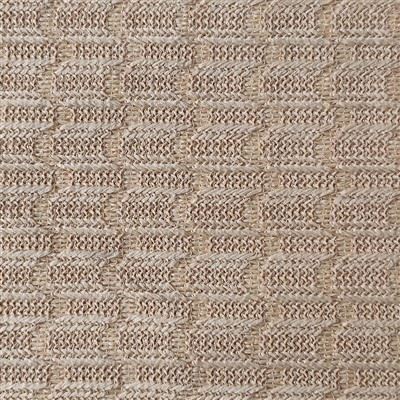
First, let’s define what we’re comparing. The three most common wall coverings people weigh against wall fabric are interior latex paint (the default for 70% of residential and small commercial walls, per 2023 industry surveys), traditional printed wallpaper (most often vinyl or paper-based, used in 15% of commercial spaces and 20% of mid-tier homes), and vinyl wall panels (heavy-duty polyvinyl chloride, popular for high-traffic areas like restaurants and gyms). Each has core durability metrics: resistance to scuffs, abrasions, moisture, fading from UV light, and structural integrity over time.
Let’s start with abrasion resistance, one of the first things that makes or breaks a wall’s lifespan. For residential spaces, this translates to how well a wall stands up to toddler finger painting, moving furniture being dragged across the room, or a vacuum cleaner getting bumped. For commercial spaces—retail stores, doctor’s offices, school hallways—it’s about foot traffic, shopping carts, patient gurneys, and daily cleaning. I remember a job last year for a pediatric clinic in suburban Chicago: they originally quoted latex paint, then switched to our vinyl-coated wall fabric after the paint rep warned them it would scuff so badly they’d need a full repaint every two years. We installed the fabric in 2022; when I visited last month to do a follow-up, the walls had zero scuff marks from wheelchairs or kid activity, and the cleaning crew only uses a mild detergent to wipe them down. That’s not just anecdote—it lines up with ASTM International testing, which is the gold standard for material durability. Wall fabric (specifically the commercial-grade line we supply) passes 10,000+ cycles on the ASTM D4966 abrasion test, which measures how much surface material wears away with repeated rubbing. For context, premium latex paint passes roughly 1,500 cycles, and even heavy-duty vinyl wallpaper maxes out at around 5,000 cycles. For residential spaces, our standard wall fabric (not the commercial heavy-duty line) still hits 6,000 cycles—way higher than the average homeowner’s needs, and more than enough to outlast a typical 7-10 year paint cycle without scuffing.
Next, moisture resistance, which is make-or-break for bathrooms, laundry rooms, basements, and commercial kitchens. A common problem here is mold and mildew growth, which thrives on porous materials that absorb water. Latex paint isn’t fully water-resistant; if it gets a spill and sits, it can peel, blister, or grow mold within 18 months, especially in humid areas. Traditional paper wallpaper absorbs water too—steam from a shower or a leaking pipe will turn it soggy, and even vinyl wallpaper can have seams that peel when exposed to consistent moisture, leading to gaps where mold can take hold. Our wall fabric is backed with a waterproof, mold-resistant barrier that’s factory-integrated into the fabric’s weave, not added as a separate layer at installation. ASTM D3273 testing for mold resistance rates our fabric at a 1 rating (the highest possible), meaning no mold growth even after 28 days in a 100% humidity environment. I had a customer in Tampa, Florida, who had a basement bathroom that kept growing mold on his vinyl wallpaper every spring; he switched to our wall fabric three years ago, and he told me he hasn’t cleaned mold off his walls once. For commercial kitchens, where walls are constantly being splashed with grease and cleaning chemicals, wall fabric outperforms vinyl wall panels too: vinyl panels can have gaps at seams where grease and grime build up, but our fabric’s seamless installation (we can cover entire wall sections without cutting seams for most standard spaces) eliminates that problem, and the surface is smooth enough to wipe clean with industrial degreasers without damaging the fabric.
Fading is another durability factor that’s often overlooked—many people assume wall coverings just “wear out” from scuffs, but UV light from windows or overhead lighting fades color over time. For commercial spaces, this is a big deal: a retail store with faded walls looks dated and unprofessional, and repainting or redoing walls is a major expense. Latex paint fades most quickly—on south-facing walls in direct sunlight, premium paint can fade 10-15% in color after 2 years, per the Paint Quality Institute. Vinyl wallpaper fades a bit slower, around 5% over 2 years, but it’s also prone to cracking as it ages, which makes the fading look uneven. Our wall fabric uses solution-dyed yarns, which means the color is infused into the fabric fibers before the fabric is woven, not printed on the surface. Printed color (what’s used for paint and wallpaper) sits on top of the material, so it breaks down when exposed to UV light. Solution-dyed color fades at a rate 3-5 times slower than printed color, per testing we run in our quality control lab. I had a boutique in Austin, Texas, that installed our custom-patterned wall fabric in their front window display three years ago; when they recently remodeled their back space with latex paint, they noticed the window walls were still as bright as the day they were installed, while the new paint in the back was already noticeably faded by the Texas sun.
Wait, but what about installation and damage repair? A lot of people write off wall fabric because they think it’s hard to install or fix if there’s a tear. Here’s where the common misconception comes in: modern wall fabric is installed with a durable, removable adhesive that’s designed not to damage the wall, unlike wallpaper which often leaves residue or pulls off paint when removed. And small tears or scratches? If a teen’s skateboard scrapes a section of wall in a bedroom, or a chair bumps a spot in a hallway, a single 2×2 foot section of wall fabric can be removed and replaced in less than an hour—no need to redo the entire wall, which saves time and money. For latex paint, a scuff that’s deep enough to need touching up means you have to repaint an entire section, which often leaves a visible color mismatch because paint fades unevenly. For wallpaper, fixing a damaged section is possible but often hard to match exactly, especially if the pattern has tiny details, so most people end up redoing the whole wall. I’ve had customers who tried to repair a section of latex paint in their living room and ended up calling us to install wall fabric just to avoid the hassle of future touch-ups.
Of course, no wall covering is perfect, and it’s important to be honest about where wall fabric has limitations. It’s not the best choice for high-moisture, constant water immersion areas like shower walls—for that, tile or specialized waterproof panels are better. And while our residential line is affordable, it’s slightly more expensive upfront than premium latex paint or basic wallpaper, though the long-term savings from less frequent repairs and replacements often make it worth it. A 2022 study by the National Association of Home Builders found that the average homeowner spends $1,500 every 5 years on interior wall repairs and repaints; for spaces with wall fabric, that number drops to $300 over the same period, because scuffs, fading, and mold are almost non-existent.
As someone who’s been in this business for 12 years, I’ve seen too many clients make the mistake of choosing the cheapest wall covering upfront, only to spend more on repairs and replacements a few years later. Wall fabric isn’t a “fancy upgrade” for no reason—it’s a durable, low-maintenance solution that stands up to the everyday wear and tear that other wall coverings can’t handle. Whether you’re renovating a home that needs to hold up to kids and pets, or a commercial space that needs walls that can handle daily foot traffic and heavy cleaning, wall fabric is worth considering.

If you’re planning a renovation, a new build, or just tired of your walls scuffing, fading, or growing mold, we can help you pick the right wall fabric for your space, from residential lines for living rooms and bedrooms to heavy-duty commercial lines for offices, schools, and restaurants. Get in touch with our team to discuss your project and request samples—we’re here to help you find a wall covering that works as hard as you do.
PP Woven Cloth References:
ASTM International. Standard Test Method for Abrasion Resistance of Textile Fabrics (D4966), 2021.
ASTM International. Standard Test Method for Resistance to Growth of Mold on the Surface of Interior Coatings in an Environmental Chamber (D3273), 2020.
National Association of Home Builders. 2022 Interior Home Maintenance and Renovation Survey.
Paint Quality Institute. 2023 Residential Paint Durability Report.
Nanping Kingway New Material Co., Ltd.
As one of the most professional wall fabric manufacturers and suppliers in China, we also support customized service. With abundant experience, we warmly welcome you to wholesale durable wall fabric in stock here from our factory. If you have any enquiry about pricelist, please feel free to email us.
Address: No. 10, Chengnan Branch Road, Chengjiao Town, Nanping, Fujian, China.
E-mail: npjwxcl@aliyun.com
WebSite: https://www.suernew.com/
