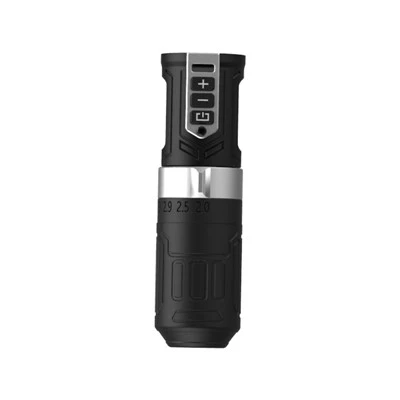
Hey there, fellow tattoo enthusiasts and artists! I’m a supplier of tattoo motors, and I know how crucial it is to pick the right resistor for your tattoo motor. It can make a huge difference in how your motor performs, and ultimately, in the quality of your tattoos. So, let’s dive into how you can choose the perfect resistor for your tattoo motor. Tattoo Motor
Understanding the Basics of Resistors
First off, let’s talk about what a resistor actually is. In simple terms, a resistor is an electronic component that restricts the flow of electric current in a circuit. In the context of a tattoo motor, the resistor helps control the speed and power of the motor.
There are different types of resistors out there, but the ones we’re mainly concerned with for tattoo motors are fixed resistors. These have a set resistance value, which means they’ll always restrict the current by the same amount. You’ll usually see them rated in ohms (Ω).
Why Choosing the Right Resistor Matters
The right resistor can have a big impact on your tattoo motor’s performance. If you use a resistor with too high a resistance, the motor might not get enough power, and it’ll run slow. This can lead to uneven lines and a less precise tattoo. On the other hand, if the resistance is too low, the motor will draw too much current, which can overheat the motor and even damage it.
Factors to Consider When Choosing a Resistor
Motor Type
Different types of tattoo motors have different power requirements. For example, rotary tattoo motors generally need a different resistor than coil tattoo motors. Rotary motors are more efficient and can run on lower power, so they might need a resistor with a higher resistance. Coil motors, on the other hand, are a bit more power-hungry and might require a lower resistance resistor.
Voltage
The voltage of your power supply is another important factor. Most tattoo machines operate on a voltage between 4 – 12 volts. If you’re using a higher voltage power supply, you’ll need a resistor with a higher resistance to prevent too much current from flowing through the motor. Conversely, if your power supply has a lower voltage, you can use a resistor with a lower resistance.
Desired Speed and Power
Your personal preference for the speed and power of your tattoo motor also plays a role. If you like a faster motor with more power, you’ll want to choose a resistor with a lower resistance. If you prefer a slower, more controlled motor, a higher resistance resistor is the way to go.
Calculating the Right Resistance
Now, let’s get into the nitty – gritty of calculating the right resistance for your tattoo motor. You can use Ohm’s Law, which states that V = I x R, where V is voltage, I is current, and R is resistance.
First, you need to know the current your motor draws. You can usually find this information in the motor’s specifications. Let’s say your motor draws 0.5 amps (A) and your power supply is 8 volts (V). Using Ohm’s Law, we can calculate the resistance like this:
R = V / I
R = 8V / 0.5A
R = 16Ω
So, in this case, you’d want a resistor with a resistance of 16 ohms.
Testing and Adjusting
Once you’ve calculated the resistance and chosen a resistor, it’s time to test it out. Hook up your tattoo motor with the resistor to your power supply and see how it performs. If the motor is running too slow, you might need to lower the resistance by using a resistor with a lower ohm value. If it’s running too fast or getting too hot, you’ll need to increase the resistance.
It might take a few tries to get it just right, but don’t get discouraged. Every tattoo motor is a bit different, and finding the perfect resistor is all about trial and error.
Common Mistakes to Avoid
- Ignoring the Motor’s Specifications: Always check the motor’s specifications before choosing a resistor. Using the wrong resistor can damage your motor and affect the quality of your tattoos.
- Not Testing: Don’t just assume that the resistor you calculated is the right one. Test it out and make adjustments as needed.
- Using Low – Quality Resistors: Cheap resistors might not have the accurate resistance values they claim to have. Invest in good – quality resistors to ensure the best performance of your tattoo motor.
Our Range of Resistors
As a tattoo motor supplier, we offer a wide range of resistors to suit different types of tattoo motors. We’ve got resistors with various resistance values, so you can find the perfect one for your specific needs. Our resistors are high – quality and reliable, so you can trust that they’ll help your tattoo motor perform at its best.
Wrapping Up

Choosing the right resistor for your tattoo motor is an important step in ensuring the best performance and quality of your tattoos. By understanding the basics of resistors, considering factors like motor type, voltage, and your desired speed and power, and using Ohm’s Law to calculate the right resistance, you can find the perfect resistor for your motor.
Tattoo Motor If you’re in the market for tattoo motors or resistors, don’t hesitate to reach out. We’re here to help you make the right choices and get the best equipment for your tattooing needs. Whether you’re a seasoned pro or just starting out, we’ve got the products and expertise to support you.
References
- Electronics textbooks covering basic circuit theory and Ohm’s Law.
- Manufacturer’s specifications for tattoo motors.
Zhuji Taituo Machinery Technology Co., Ltd.
Zhuji Taituo Machinery Technology Co., Ltd. is one of the best tattoo motor manufacturers and suppliers in China for over 20 years, also supports customized service. Welcome to buy advanced tattoo motor made in China here and get quotation from our factory. For price consultation, contact us.
Address: 101, Building 12, Youdi, No. 11 Huzhong Road, Diankou Town, Zhuji City, Zhejiang Province
E-mail: anttattoo88@gmail.com
WebSite: https://www.antinktattoo.com/
