As a low-voltage distribution cabinet supplier, I get this question all the time—not just from clients, but even from junior engineers who’re new to electrical infrastructure. A lot of folks think these cabinets are just big metal boxes to hide wires, right? If that were true, we’d all be making the cheapest welded metal crates we can find, slapping a label on them and calling it a day. But no, aesthetic design for these isn’t just “pretty”—it’s tied to function, safety, and even how a whole project holds up long-term. Let’s break this down the way I’d break it down at a coffee shop with a first-time commercial builder, no stuffy jargon. Low-Voltage Distribution Cabinet

First off, let’s get the “why aesthetics matter here” part outta the way fast. Way too many people overlook that distribution cabinets live everywhere: in retail storefronts where customers might walk past the utility closet, in office lobbies, on construction sites where crews need to access them daily, even in residential high-rise basements where maintenance teams work in tight, visible spaces. If a cabinet looks like it was thrown together with random bolts and a rusty door, two things happen: first, new contractors walking the site will assume it’s low-priority, so they’ll skimp on closing it tight or labeling stuff correctly. Second, for projects where aesthetics are non-negotiable—like a boutique hotel or a modern co-working space—you can’t have a big, dented, mismatched metal box ruining the interior design. A good aesthetic doesn’t just “look nice”; it works with the space it’s in, not against it.
Now, let’s get to the actual requirements, the stuff we actually test for when designing a cabinet. I’ve worked on over 1,200 cabinets in the last 8 years, so these are the non-negotiables we flag before even picking a paint color.
First, consistent dimensional symmetry. This isn’t just about being “neat”—it’s about fit. If you’re making a cabinet that’s supposed to fit into a 24” wide utility niche, the side panels can’t be off by a quarter-inch. A half-millimeter gap might not seem like much, but if you’re lining up bus bars inside, that tiny gap throws off the whole electrical layout, and if it’s a recessed cabinet, it won’t sit flush with the wall. We use laser-cut steel for all our panels now, and every single cut’s within 0.2mm tolerance. Old-school welded cabinets would have warped edges, so doors wouldn’t line up evenly—you’d see a ¼” gap on one side and a hairline on the other, which not only looks bad but also lets dust or water sneak in, which is a fire hazard. Symmetry here isn’t vanity; it’s functional.
Second, uniform surface finish with intentional, label-friendly touchpoints. I can’t tell you how many clients send us photos of old cabinets where the paint’s chipped, or the labels are scratched off, and they’re losing thousands of dollars in downtime because they can’t find the right circuit breaker. For our cabinets, we use a powder coat finish, not liquid paint, because it’s way more scratch-resistant and doesn’t fade in sunlight (that’s a big one for outdoor cabinets, like the ones for strip mall parking lots). But here’s the aesthetic trick: we leave a 2” x 3” bare metal strip on the door, right at eye level, so maintenance teams can print and tape waterproof circuit labels without them peeling off. Also, no weird rivets sticking out—we seam all edges so they’re smooth, not sharp, and we only use hidden hinge hardware instead of big, shiny exposed hinges. That keeps the look clean, and it also means the door doesn’t swing awkwardly when someone’s working in a tight space.
Third, modular, accessible layout that doesn’t look cluttered. A lot of cheap cabinets cram all the breakers and wires in so tight you can’t get a screwdriver in there, which is a nightmare for maintenance. We design our cabinets with a modular rail system—so breakers snap in easily, and there’s 2” of clear space around all wiring, both inside and outside the cabinet. The aesthetic part here is that all internal components (wires, breakers, bus bars) are grouped by circuit type, and we use color-coded wiring that matches the NEC standards, but we also label every single wire along its length, not just at the end. I’ve seen cabinets where the wiring is a jumble of different colors, all stuffed in, and it looks like a rat’s nest—bad for safety, bad for a client’s project’s overall look (especially if the utility closet is in a space that needs to look professional for customers). Also, the door has a window that’s sized just right—big enough to see the status lights on the breakers, but not so big that it weakens the door’s structure. We use shatter-resistant polycarbonate, so it doesn’t crack if someone accidentally bumps it with a tool.
Fourth, environmentally aligned design for mixed-use spaces. This is a big one now, with all the commercial builders going for green certifications. If a cabinet’s going in a LEED Platinum office building, we make sure the exterior color matches the building’s color palette—we have a custom color matching service, so if a client sends us a paint sample from their architect, we can match it exactly. For outdoor cabinets, we use corrosion-resistant steel, so it doesn’t rust and look beat up after a year, which is key for retail spaces where the utility cabinet is visible from the parking lot. We also avoid toxic coatings—no lead-based paints, no heavy metals in the powder coat—so that’s a big sell for green-focused projects. A client of ours did a 20-story office tower last year; they wanted all utility components to blend in, so we matched our cabinets to the building’s stone exterior, and you’d never guess they’re distribution cabinets unless you’re looking for the access door.
Wait, but there’s a thing people don’t talk about: safety aesthetics, too. A cabinet that looks “unfinished” or has loose parts is a hazard. We make sure all edges are rounded, no sharp corners, because if a maintenance team is carrying a ladder past the cabinet, they don’t wanna get cut. Also, the lock we use is a combination lock that’s matched to the cabinet’s color, so it doesn’t stick out like a sore thumb—no generic silver padlocks. We also add small, reflective strips to the bottom of outdoor cabinets, so at night, construction crews can see them and not trip over them. That’s not just “nice”—it’s part of the aesthetic design, because it’s about how the cabinet integrates into the space, not just how it looks when it’s brand new.
Now, let’s be real—some people will say, “Why does this matter? It’s a functional part!” But I’ll tell you a story: a restaurant client of ours was building a new location, and they went with the cheapest cabinet they could find from a big box supplier. The cabinet was dented, the paint was mismatched to their interior, and the wiring was a mess. Six months later, they had a power outage, and their maintenance team couldn’t find the right breaker because the labels were scratched off. They ended up losing $15k in food inventory, and they had to replace that dented cabinet. They came back to us, and we gave them a cabinet that matched their restaurant’s branding, with clear labels, and modular wiring. That’s when it clicked for them: aesthetics for distribution cabinets aren’t a luxury—they’re a cost saver, and a way to make the whole space work better.
I also wanna address a common misconception: you don’t have to choose between “pretty” and “compliant with electrical codes.” All our cabinets meet NEC, IEC, and local OSHA standards, so we’re not cutting corners on safety to make them look good. The aesthetic design is built on top of the safety and functional requirements, not instead of them. For example, the modular internal layout isn’t just “pretty”—it’s required by code for easy maintenance. The uniform surface finish isn’t just nice to look at—it’s required to prevent corrosion, which can cause electrical fires. So every “aesthetic” choice we make has a reason, not just a design one.
Another thing: longevity aesthetics. A lot of cabinets will fade, peel, or rust after a few years, which means you have to replace them or paint them, which is expensive. We use a powder coat finish that’s UV-stabilized, so it doesn’t fade in direct sunlight, and a galvanized steel base, so it doesn’t rust in damp basements or coastal areas. We also offer a 10-year warranty on the finish, so our clients don’t have to worry about their cabinets looking old and beat up before the building’s even paid off. That’s a big selling point for property managers, who have to keep their buildings looking good for tenants.
Now, if you’re a builder, an electrical contractor, or a property manager reading this, you’re probably thinking: “How do I get this right when I’m ordering cabinets?” The key is to work with a supplier that doesn’t just sell you a metal box—they understand that the cabinet’s part of your project’s overall design. When we talk to clients, we ask questions like: where’s the cabinet going? Is it indoor or outdoor? Does it need to blend in with the space, or is it going in a utility closet that’s not visible? What color or finish are you working with? That way, we don’t just make a cabinet that’s functional—we make one that works for your specific space.
I’ve been in this business for 8 years, and I still get asked why distribution cabinets need to look good. My answer is always: they’re not just boxes for wires—they’re part of the infrastructure that keeps every building running. If they’re ugly, hard to access, or look like they’ll fall apart, that reflects on your whole project. A good aesthetic design for a low-voltage distribution cabinet is about balancing function, safety, and how it fits into the world around it. It’s not about adding fancy trim or a logo that glows at night—it’s about making something that works, lasts, and doesn’t get in the way of the space it’s in.
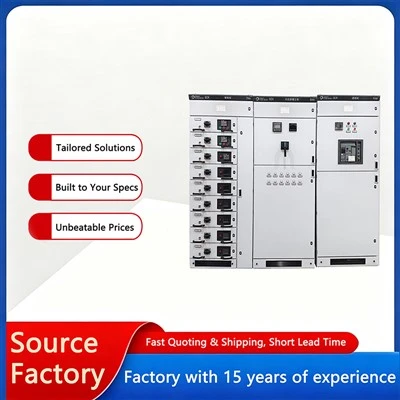
If you’re planning a project, need a custom cabinet, or just want to chat about what will work best for your space, reach out to us to connect and discuss your requirements. We’re here to make sure your distribution cabinets are not just compliant, but also well-suited to your project’s needs.
High-Voltage Distribution Cabinet References:
- National Electrical Manufacturers Association (NEMA) Standards for Enclosure Aesthetics and Performance, 2022.
- International Electrotechnical Commission (IEC) 62208: Low-Voltage Switchgear and Controlgear Assemblies, 2021.
- Occupational Safety and Health Administration (OSHA) Guidelines for Electrical Enclosure Accessibility, 2023.
- Building Owners and Managers Association (BOMA) Best Practices for Infrastructure Aesthetics in Commercial Spaces, 2022.
Hangzhou Dagang Electric Co., Ltd.
As one of the most experienced low-voltage distribution cabinet manufacturers in China, our products have good reputation in the market. We warmly welcome you to wholesale high quality low-voltage distribution cabinet for sale here from our factory. If you have any enquiry about cooperation, please feel free to email us.
Address: 1st Floor, Building 11, No.10 Lingang Road, Renhe Subdistrict, Yuhang District, Hangzhou City
E-mail: fang@dagangelectric.com
WebSite: https://www.hzdg-electric.com/
