If you’ve ever hung around industrial machinery shops, you’ve probably heard someone mutter “Babbitt bearing” like it’s a magic fix for a lot of frustrating breakdowns. I’ve been selling Babbitt combination bearings for over a decade now, and I’ve lost count of how many times a customer has called me panicking because their setup’s bearing blew, or it’s guzzling way more power than it should, and they swear it’s “just a random bad part.” Nine times out of ten, the problem isn’t a bad bearing—it’s that no one stopped to actually think about how the load-carrying capacity of their Babbitt combination bearings connects directly to how the whole machine runs. Babbitt Combination Bearings
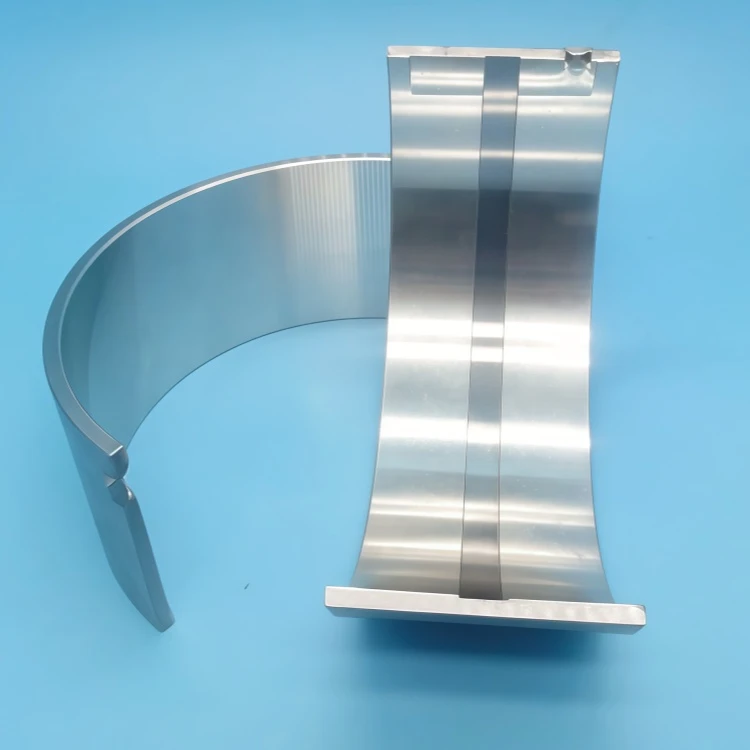
Let’s start with the basics, no stuffy engineering textbook fluff. Babbitt bearings, for anyone new, are those smooth, soft-metal lined bearings (usually tin or lead based) that slide over a rotating shaft, right? The “combination” part just means they’re not solid Babbitt—they have a steel or cast iron back that gives them shape and strength, and that thin Babbitt layer that does the actual sliding work. The load-carrying capacity isn’t just some random number we throw on a spec sheet to make our bearings look tough. It’s the exact limit of how much weight, pressure, or force that bearing can take before it starts to fail, and that number dictates everything from how much fuel a pump uses to how often a crusher breaks down.
I remember a client from a grain mill a couple years back. They were running their wheat separator, a big heavy machine that shoves tons of grain through every day, and their old bearings were dying every six weeks. They’d tried cheap off-brand bearings, replaced them with identical ones from another supplier, nothing worked. When they called me, the first thing I asked was how much actual load that bearing was taking. Turns out, they were running the separator at 120% of its rated capacity—stuffing more grain through to get ahead in harvest season—and their old bearings only had a load rating for the standard 100% load. They were asking a bearing to do work it wasn’t built for, so it just wore out fast, and every time they shut down to replace it, they lost hundreds in downtime. We swapped in our higher-rated Babbitt combination bearings, adjusted their operation just a tiny bit to keep loads under the new limit, and that bearing’s still going strong three years later. That’s the kind of stuff that makes this job worth it—seeing a solution that fixes their actual problem, not just slapping a new part on.
Wait, let’s get into why load-carrying capacity actually matters under the surface, not just for avoiding breakdowns. Babbitt works because it’s soft enough that, when the shaft spins, a tiny bit of Babbitt wears off and forms a thin lubricated layer between the metal and the bearing—like a tiny, custom-cushioned slide for the shaft. If the load is too high, that thin film can’t hold on. It gets squeezed out, the metal and shaft start rubbing together, and you get that classic bearing failure: scoring, seizing, metal shavings everywhere. But here’s the thing about Babbitt combination bearings specifically—their load capacity isn’t just the Babbitt layer. It’s a combo of the Babbitt’s own strength, the quality of the bond between the Babbitt and the back, and how that back is made. Cheap bearings often skimp on the bond—they just spray Babbitt on the steel back without cleaning it right, so when load hits, the Babbitt peels off, not just wears out. We use centrifugal casting for our Babbitt layers, so it’s fused solid to the steel back, which bumps up the load capacity way more than the cheap cast ones you get from no-name suppliers.
Another thing people don’t talk about enough: load-carrying capacity ties straight to energy efficiency. A lot of factories run on tight margins, so wasting electricity is a killer. If your bearing can’t handle the load, it’s got more friction, so the motor has to work harder to turn the shaft. I had a steel mill customer a few months back—they were complaining their conveyor motors were using 15% more power than the month before, and their bearings were hot to the touch. Turns out, the rollers on their 500-foot conveyor were carrying extra load from a misaligned guide rail, and their original bearings only had a load rating for standard rollers. The higher-rated bearings we supplied kept the lubrication film intact, friction dropped, and their power bill went down by over $2,000 a month. That’s not a sales pitch—that’s real money in their pocket, all because we matched the bearing’s load capacity to their actual needs, not what they thought they needed off the spec sheet.
But here’s the catch: load-carrying capacity isn’t a one-size-fits-all number. A bearing that works for a grain mill separator will die instantly in a high-speed pump, because speed and load go hand in hand. If you have a bearing that’s rated for high load at slow speeds, running it fast will kill it just as fast as overloading it. The combination of load, speed, and lubrication is the sweet spot we nail when we pick the right bearing. I had a construction equipment customer who tried to use a stationary machine bearing on a mobile excavator—low speed, super high load, but the stationary bearing was only rated for continuous slow load, not the shock loads from digging into dirt. The shock (that sudden jolt when the bucket hits rock) pushed the load over the rating, and the bearing seized up on the job site, costing them a whole day’s work. We swapped them in bearings rated for dynamic shock loads, and they haven’t had an issue since. That’s why I always ask customers to bring in all the details, not just “I need a bearing for X machine.” Speed, load type (steady vs. shock), lubrication type—all that stuff tweaks what load capacity you actually need.
Wait, let’s address the confusion a lot of folks have: higher load capacity isn’t always better. I’ve had customers call and say “just send me the highest load bearing you’ve got” because they want to avoid all issues. But higher load capacity often means a slightly thicker Babbitt layer, or a stronger back, which makes the bearing a bit stiffer. If you put a stiff, high-load bearing on a small, lightweight pump, it won’t flex enough to seat properly, so it might have more vibration, which actually shortens its life. It’s like wearing work boots that are way too heavy for a kid—they’re tough, but they make moving harder, and you get blisters. We take the time to figure out the exact sweet spot so they’re not paying for capacity they don’t need, and they’re not paying for replacements every few months because they didn’t get enough.
Also, don’t sleep on maintenance and lubrication when it comes to load capacity. A bearing with a 10,000-pound load rating won’t hit that if you never grease it. Lubrication isn’t just a nice add-on—it’s what lets that load spread evenly across the bearing surface, instead of concentrating on a tiny spot that wears out fast. I always tell customers: if you skimp on lubrication, even a great bearing with perfect load capacity will fail early. The load rating is the maximum the bearing can handle when it’s properly lubricated and installed, so don’t ignore those basics.
I’ve been doing this long enough that I’ve seen it all. I’ve fixed bearings that were installed backwards (load was hitting the wrong side), bearings that were too big or too small (wrong load rating), bearings that ran hot because the lubricant was wrong. Every single time, the root issue comes back to how well the bearing’s load-carrying capacity matches the actual operation of the machine. A lot of suppliers will just sell you whatever is the easiest match for your machine part number, but that’s lazy. We don’t do that. We ask questions: how much weight are you moving? Is there shock load? How fast is the shaft spinning? What lubricant are you using? Then we pick the Babbitt combination bearing that has exactly the load capacity you need, no more, no less.
At the end of the day, bearings are the unsung heroes of industrial work. They hold the whole machine together, they take all the stress, and when they work right, no one thinks about them. When they don’t, everyone’s day is ruined. That’s why taking the time to get the load-carrying capacity right isn’t just a detail—it’s the difference between a bearing that lasts 6 weeks and one that lasts 6 years. We’ve got decades of experience matching bearings to real-world loads, not just spec sheets. If you’re dealing with bearing issues, or you need to replace old parts and don’t want to deal with constant breakdowns, hit us up to chat. No sales pitch, no pressure—just help figuring out what you actually need, because that’s what we do.
Tilting Pad Thrust Bearings References:
- Neale, M. J. (1995). Tribology Handbook (2nd ed.). Butterworth-Heinemann.
- Stachowiak, G. W., & Batchelor, A. W. (2014). Engineering Tribology (4th ed.). Elsevier.
- American Bearing Manufacturers Association. (2020). Babbitt Bearing Design and Application Standards.
- Totten, G. E., & Lee, S. (2007). Applied Tribology: Bearing Design and Lubrication (2nd ed.). Wiley.
Wenzhou Zhengbang Bearing Co., Ltd.
We are one of the most professional babbitt combination bearings manufacturers and suppliers in China. With abundant experience, we warmly welcome you to buy customized babbitt combination bearings at competitive price from our factory. If you have any enquiry about free sample, please feel free to email us.
Address: Units 1-1 and 3-1, Building 12, Yongxing Nanyuan Small and Micro Enterprise Startup Park, Binhai 2nd Road, Yongxing Subdistrict, Longwan District, Wenzhou City, Zhejiang Province.
E-mail: zbbearing@zbbearing.com
WebSite: https://www.zb-bearings.com/
