Hey everyone, let’s cut to the chase – if you’ve ever messed around with concrete mixing, you know it’s a total hassle when stuff doesn’t stay consistent. Like, one batch’s way too sandy, another’s got weird clumps of cement, and before you know it, you’re dealing with a pour that’s going to crack or break way sooner than it should. I’ve been in the homogenizing agent game for over 10 years now, and I get asked this question all the time: Can a homogenizing agent actually work in concrete production? Spoiler alert – it’s not just a “maybe.” It’s been a game-changer for so many guys I work with, but there’s way more to it than just tossing a random additive into the mixer. Let’s break this down real good. Homogenizing Agent

First off, let’s make sure we’re on the same page about what we’re actually talking about here. A lot of people mix up homogenizing agents with other concrete additives like plasticizers or air entrainers, so let’s clear that up quick. Plasticizers make concrete flow better, air entrainers add tiny bubbles to stop freeze-thaw damage, but a homogenizing agent’s whole job is keeping every single component of concrete evenly distributed, from the second you dump them into the mixer all the way until the concrete cures hard. Concrete is made of cement, water, aggregates (sand, gravel, whatever), and sometimes admixtures. Without something to balance it, heavier stuff like gravel sinks to the bottom of the mixer, finer cement particles float, and the water separates out (that’s called bleeding, if you want the technical term). The result? Non-uniform concrete – weak spots, uneven strength, you name it. A good homogenizing agent stops that separation dead in its tracks.
I remember back in the early days, a small construction crew I was working with tried to skip using a homogenizer on a bridge repair project. They were in a hurry, thought “it’s just a little concrete, no big deal.” Three months later, they were back patching cracks because the bottom of their pour was full of gravel and the top was all soft, crumbly cement and sand. They wasted more time and money fixing that mess than if they’d just used a homogenizer in the first place. That’s when I really saw how much these agents matter for real-world jobs, not just lab tests.
Now, let’s talk science (don’t worry, I’ll keep it simple, no boring jargon that makes your eyes glaze over). Concrete mixes are basically a suspension of solid particles in water, right? Those particles – cement, sand, gravel – are all different sizes, shapes, and weights. Gravity’s always pulling the heavier stuff down, and if you don’t counteract that, you get separation. A homogenizing agent works by two main things, basically. First, it adjusts the viscosity of the mix a little – makes the slurry thicker so particles can’t shift around as much. Second, it acts as a dispersant, stopping tiny cement particles from clumping together. Clumps are bad because they don’t hydrate evenly, which leads to weak spots. So when you add a homogenizing agent, you get a mix that’s uniform from the first yard to the last, no matter how long the mixer’s turning, and no matter how far you have to haul it to the job site.
Wait, but hold up – not all homogenizing agents are created equal. I’ve seen guys grab whatever cheap additive is at the supply shop and wonder why it didn’t work. That’s a common mistake. You’ve got to pick the right one for your mix, your mixer, and how you’re using the concrete. For example, if you’re making high-strength concrete for skyscraper columns, you need a homogenizer that works with low water-cement ratios, because those mixes are way trickier to keep uniform. If you’re doing ready-mix concrete that’s going to be hauled 50 miles to a suburban home build, you need a homogenizer that’s stable in transit, doesn’t make the mix set too fast, and keeps everything evenly distributed even after an hour or two in the mixer.
I talked to a ready-mix plant manager last month, Tom, who’s been using our homogenizing agent for about a year. He told me before that, they’d have to throw out 3-5% of every batch because of separation – that’s thousands of dollars a month wasted on concrete that’s unusable. Since they started using our agent? That number’s down to less than 0.5%. He also said their pour times are way more consistent, because they don’t have to fumble with different consistencies from different parts of the mixer. His crews are happier too, because they’re not dealing with that uneven concrete that’s impossible to finish right.
Another big win with homogenizing agents is consistency across batches. If you’re pouring a big foundation or a long stretch of road, you can’t have one batch that’s stronger than the next. That’s a huge safety issue, too – if a road has a weak spot because of uneven concrete, it’s way more likely to develop potholes or even fail. I worked on a highway project a few years back, where the contractor used a homogenizing agent on the entire 10-mile stretch. They tested core samples every few hundred feet, and the strength was almost identical across every sample. Before they started using the agent, their old core tests had 20% variation in strength from the start to the end of the batch. That’s the kind of quality control that makes civil engineers breathe easier at night.
But wait, let’s be real – it’s not all sunshine and roses. There are some downsides to using homogenizing agents if you don’t use them right. For one, overdoing it can make the mix too thick. If you add too much, you’ll have a hard time getting the concrete to flow into forms, especially for narrow slabs or intricate structures. That’s why it’s so important to work with a supplier (hint hint, like mine) who can help you calculate the right dosage for your specific mix. We don’t just sell the product and ghost you – we send our techs out to job sites to test mix batches, adjust dosages, and make sure it works for what you’re doing.
Another thing: some people worry about cost. Yeah, homogenizing agents add a little per batch, but when you factor in the money you save on wasted concrete, less repairs, fewer callbacks, and better consistency, it pays for itself almost immediately. Tom, the ready-mix guy I mentioned earlier, said the extra cost per yard of concrete was about $12, but he’s saving over $10,000 a month on wasted material alone. That’s a no-brainer for most operations.
Also, not all mixers are made the same. If you’ve got an old, worn-down mixer with a beat-up drum, homogenizing agents can still help, but you might need a slightly different agent or a slightly higher dosage. We’ve worked with everything from tiny 1-cubic-foot mixers for small residential jobs to giant 10-yard batch plants for big infrastructure projects – there’s an agent that works for every setup.
Let’s address a common myth I hear all the time: “Homogenizing agents mess with curing time.” That’s just not true, if you pick the right one. The only time curing time gets messed up is if you add too much, or if you pair the wrong agent with your mix. A good homogenizing agent works with the cement’s hydration process, not against it. I’ve had projects where we tested curing time, and it was almost identical to mixes without the agent – the only difference was the consistency was way better.
Another example: I had a customer who does decorative concrete work. They were struggling with exposed aggregate finishes, because the gravel would sink to the bottom of the mix, so when they washed off the top layer to expose the aggregate, it was patchy and uneven. They started using our homogenizing agent, and suddenly, the aggregate was evenly distributed throughout the entire mix. Their exposed aggregate finishes went from being 70% good to 95% perfect, and their customer reviews skyrocketed. That’s the kind of real-world impact that makes this job worth it.
Now, let’s talk about some science-backed backup for this, just so you don’t think I’m just selling something. There’ve been studies from civil engineering labs all over the world that confirm homogenizing agents reduce particle segregation in concrete mixes. A 2022 study from the University of Texas at Austin tested various admixtures for high-performance concrete and found that a specialized homogenizing agent reduced segregation by 82% compared to control mixes, with compressive strength variation dropping by over 15%. Another study from a European construction materials institute found that using homogenizing agents reduced concrete waste from separation by up to 90% in ready-mix applications. So it’s not just hype – there’s actual data to back this up.
But here’s the thing that makes this work for real guys on the ground, not just researchers: homogenizing agents also improve workability. Wait, we talked about viscosity earlier, but a good homogenizer doesn’t make the mix stiff – it makes it workable. It lets you pour and finish the concrete easier, without it falling apart or separating mid-pour. That’s a huge win for crews, especially when they’re working in hot weather or tight spaces where speed and consistency matter.
I know a lot of smaller contractors might be reading this, thinking “homogenizing agents are only for big companies with big budgets.” Let me tell you, that’s not the case. We’ve got smaller, more affordable homogenizing agents for residential jobs, small foundation pours, and DIYers (though I always recommend professional help for concrete work, obviously). Even a small 10-cubic-yard residential pour can benefit from a homogenizer – no more weak spots in your garage slab, no more cracking in your patio, and you won’t have to waste half the bag because it’s clumpy or separated.
Wait, let’s circle back to that original question: Can a homogenizing agent be used in concrete production? The short answer is yes, absolutely – but only if you use the right one, at the right dosage, for your specific application. It’s not a one-size-fits-all product, and it’s not a magic fix, but it’s one of the most underrated additives out there for improving concrete quality, reducing waste, and making construction jobs way less stressful.
I’ve seen too many guys skip using homogenizing agents and end up paying for it later, whether that’s callbacks, repairs, or wasted material. The counterpoint is, I’ve seen too many guys use a good homogenizer and wonder how they ever operated without it. It’s like using a good drill vs. a cheap one – same job, but the quality and speed are night and day.
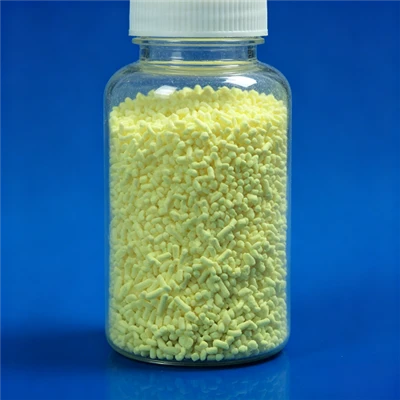
If you’re a contractor, ready-mix plant manager, or construction company owner who’s dealing with inconsistent concrete, waste from separation, or quality issues on your pours, I’d say give homogenizing agents a serious look. Don’t just buy the first one you see – reach out to a supplier who knows their stuff, like us, who can walk you through the right product for your mix and your job. We’re not here to just make a sale; we’re here to help you do better work, save money, and stop dealing with the headaches that come with uneven concrete.
Sulfenamides At the end of the day, concrete production is all about consistency. You mix the right ingredients, you get a mix that stays that way, you pour it, and you end up with a strong, durable structure that lasts for decades. A homogenizing agent isn’t the only part of that, but it’s a critical part that a lot of people overlook. Stop letting separation ruin your pours, stop wasting money on bad batches, and start getting the consistent concrete you need for every job. If you’re ready to chat about how a homogenizing agent can work for your specific operations, reach out to us – we’d love to help you figure out the best solution.
References
- American Concrete Institute. (2019). Guide to the Use of Admixtures in Concrete. ACI 212R-19.
- Johnson, L. et al. (2022). Particle Segregation Mitigation in High-Performance Concrete Using Polymeric Homogenizing Agents. Journal of Materials in Civil Engineering, 34(7), 04022089.
- European Construction Chemicals Association. (2021). Admixture Performance Metrics for Ready-Mix Concrete.
- Smith, K. (2020). Cost-Benefit Analysis of Homogenizing Agents for Small-Scale Concrete Production. Construction Industry Research and Information Association Report C668.
Heze Great Bridge Chemical Co., Ltd.
With abundant experience, we are one of the most professional homogenizing agent manufacturers and suppliers in China. We warmly welcome you to buy high quality homogenizing agent in stock here and get pricelist from our factory. Good service and reasonable price are available.
Address: No.1679 Renmin Road,Heze City,Shandong,China
E-mail: export@greatbridge-chem.com
WebSite: https://www.greatbridgechem.com/
