If you’ve ever wandered into a carpenter’s workshop, a electrician’s truck, or a plumber’s van, you’ve probably noticed one thing: their toolboxes aren’t just a random pile of wrenches, screwdrivers, or hammers. Every tradesperson I’ve worked with swears by the exact setup they use, tailored to their specific job. And as a toolbox supplier, I get asked this question all the time: “Are there actual toolboxes built for specific trades, or is it just marketing hype?” Let me break this down, because it’s way more than just fancy packaging. Toolboxes

First, let’s get one thing straight: generic toolboxes work for people who need a little bit of everything, but tradespeople don’t need “a little bit of everything.” They need specific tools, organized in a way that keeps them on a job site for 12 hours without digging through a mess of loose sockets. Take electricians, for example. I’ve built custom box layouts for dozens of electricians over the years, and their biggest pain point? Needing to grab a wire stripper, a voltage tester, and a screwdriver for a light switch installation—all without fumbling in the dark under a house. So electrician-specific toolboxes have features like padded slots for wire strippers, built-in holders for non-contact voltage testers (non-negotiable for safety), and deep, sturdy drawers for fish tape and cable cutters that don’t roll around. I once had an apprentice electrician come to me saying his old box made him 20 minutes late every morning because he couldn’t find his ground fault circuit interrupter tester. A tailored layout fixed that in a week—his “late” problem was gone, and he said his foreman noticed how much faster he worked.
Then there’s carpentry, specifically finish carpentry vs. framing carpentry—two totally different worlds. Framers bash through 10-hour days lifting heavy lumber, swinging hammers, and hauling their boxes up ladders. Their toolboxes need to be tough—think reinforced steel corners, rubber bumpers so they don’t ding a drywall, and maybe even wheels that can roll over dirt and gravel. Finish carpenters, on the other hand, are working on trim, baseboards, and cabinetry—no roughhousing needed, but precision is everything. Their toolboxes have soft foam inserts for chisels, tape measures, and levels, so they don’t get scuffed. I remember a finish carpenter who told me he ruined a $200 chisel because it bounced around in a generic box on a job site. After he got a custom finish carpentry box with a molded slot for that exact chisel, he said he hasn’t had to replace a precision tool because of impact damage since. That’s the kind of trade-specific feature you can’t get from a big-box store’s one-size-fits-all bin.
Plumbing is another great example. Plumbers carry tools that are way bulkier than a standard screwdriver set—pipe wrenches, basin wrenches, augers for clogs, and of course, a plunger that most people don’t want next to their nice screwdrivers. Plumber-specific toolboxes have separate, sealed compartments for messy tools, so sewage or pipe dope doesn’t get on a nice adjustable wrench. They also have deep, wide drawers that can fit a 12-inch pipe wrench without bending or scratching it. I once had a plumber bring in a box that leaked raw pipe dope all over his socket set—he was furious because he had to replace half his tools. A plumber-specific box with a sealed, dedicated compartment for oil or messy tools would have saved him hundreds of dollars and a lot of hassle. It’s the little, specific things that make all the difference.
Now, let’s talk about why this isn’t just a “new trend.” Trade work has gotten way more specialized in the last 20 years. Back in the day, a carpenter might do a little framing, a little finish, and even some basic plumbing on the side. Now, if you’re a framer, you rarely do finish work—clients hire finish carpenters specifically for the trim. Same with electricians: you’ve got residential electricians, commercial electricians, and even low-voltage electricians who work on security systems, Wi-Fi, and doorbells. Each of those needs totally different tools. Low-voltage techs, for example, don’t carry large wire strippers or fish tape for heavy Romex—they need tiny, precision tools for small Cat5 or HDMI cables. So their toolboxes have smaller, thinner slots for those tools, and a separate section for cable testers and punch-down tools that residential electricians don’t use. Generic boxes can’t accommodate that level of specialization.
I’ve also noticed that tradespeople care more about tool organization than anyone else. A teacher might keep a few pens and papers in a box, but a tradesperson’s toolbox is their office, their workshop, and their lifeline. If you can’t find your 10mm socket during a job, that’s not just an inconvenience—that’s a delay, which means lost money. A lot of the toolboxes we supply for specific trades are designed with “one-handed access” too—electricians and plumbers often have one hand busy holding a wire or a pipe, so they need to open a drawer with one hand, not two. Generic boxes usually have two-hand latches, which is a nightmare when you’re up on a ladder or under a sink.
Wait, but let’s address the counterargument: “Can’t I just buy a generic box and organize it myself?” Sure, you can. But here’s the thing: most tradespeople don’t have time to design a custom layout, or the money to waste on a box that doesn’t fit their needs. And some features are impossible to replicate on your own. For example, a framing carpenter’s box might have a built-in spot for a speed square that’s angled just right so it’s easy to grab while holding a nail gun. You can’t carve that into a generic plastic box without ruining its structural integrity. Or an electrician’s box with a slot that holds a 25-foot fish tape so it doesn’t kink—kinking a fish tape on a job site is a disaster, and generic boxes usually have small slots that force the tape to bend awkwardly. I’ve seen tradespeople try to modify a generic box, only to have it break after a few weeks of heavy use. The trade-specific boxes are made with durable materials that stand up to the abuse of daily job site work, not just being stored in a garage.
Another angle: safety. Some trades have safety tools that need to be easily accessible. For example, HVAC techs work with refrigerant, which can be dangerous if mishandled. Their toolboxes have a dedicated, lockable compartment for refrigerant gauges and recovery machines, so they don’t get knocked around and damaged, which could lead to leaks or inaccurate readings. Lockable compartments also keep expensive tools secure—HVAC gauges are pricey, and job sites are often busy places where tools can go missing. Generic boxes don’t always have secure lockable spaces for high-value, safety-critical tools.
I’ve been in the toolbox game for over 10 years now, and I’ve worked with everything from new apprentices to master tradespeople who’ve been in the business for 30 years. The common thread between all of them is this: when their toolbox works for their specific trade, they’re happier, more productive, and less likely to make a mistake on a job. I had a master electrician tell me last month that switching to our trade-specific box cut his job time by almost 10% because he never had to hunt for tools anymore. That’s not a small number—for an electrician making $35 an hour, that’s an extra $35 an hour in billable work. Multiply that over a 40-hour week, and that’s an extra $1,400 a month. That’s huge for anyone running a trade business.
But I also want to be clear: not all “trade-specific” toolboxes are created equal. A lot of big brands slap a “carpentry” label on a generic box and charge 20% more, and that’s just marketing. The real trade-specific boxes are designed with input from actual tradespeople, not just marketers sitting in an office. For example, when we designed our electrician boxes, we worked with 20 journeyman electricians over six months, testing prototypes on real job sites. They told us they needed a bigger slot for their diagonal cutters, a separate spot for their multimeter, and a drawer that could hold a big bag of wire nuts without crushing them. We adjusted the design three times before we launched it, and that’s why our boxes work—they’re built by people who talk to the people who use them every day, not just guess what they need.
Let’s also talk about durability. Generic toolboxes are usually made with thin, flimsy plastic that cracks if you drop a socket on it or drag it over concrete. Trade-specific boxes are made with heavy-duty polyethylene, reinforced steel, and rust-resistant hardware. A framing carpenter might drag their box over concrete, load it into a pickup truck bed, and drop it off a ladder—our trade-specific boxes are tested to handle that. I’ve had customers come back to us five years later saying their box is still going strong, and they’re the most loyal customers we have.
So, to circle back to the original question: yes, there are definitely toolboxes built for specific trades, and they’re not just a gimmick. They’re designed to solve real, specific problems that generic boxes can’t. They save tradespeople time, money, and hassle, and they’re built to last through the daily grind of job site work.
If you’re a tradesperson who’s tired of digging through a messy generic box, or you keep breaking tools because they’re bouncing around, it might be time to check out trade-specific toolboxes. We work with carpenters, electricians, plumbers, HVAC techs, and more, and we can help you find the right layout for your exact trade, no matter how specific your needs are. Whether you’re an apprentice just starting out or a master tradesman with 30 years under your belt, a trade-specific toolbox can make a huge difference in how you work.
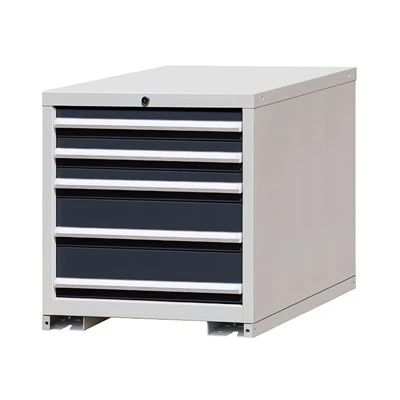
If you’re ready to talk through your needs and find the perfect toolbox for your trade, don’t hesitate to reach out and connect with our team. We’re here to help you find a solution that fits your work, your tools, and your budget.
All in One Battery Pack References
- Occupational Safety and Health Administration (OSHA). Tool Storage and Organization in Trades. U.S. Department of Labor, 2022.
- National Association of Home Builders (NAHB). Trade Tool Efficiency and Productivity Report. NAHB, 2021.
- Journal of Construction Education. Specialized Tool Design and Trade Productivity. Vol. 24, No. 2, 2020.
Wuhu Qiahao Metal Products Co., Ltd.
As one of the most professional toolboxes manufacturers and suppliers in China, we warmly welcome you to buy premium toolboxes made in China here from our factory. All customized products are with high quality and competitive price. Contact us for pricelist.
Address: Building 5, No. 3 Yongtai Road, Wanzhi District, Wuhu City, Anhui Province, China
E-mail: 290418907@qq.com
WebSite: https://www.qiahaometal.com/
