Hey there! I’m a supplier of anionic polyacrylamide (APAM), and I’ve seen firsthand how this amazing polymer can work wonders in different water qualities. In this blog, I’m gonna share with you how APAM performs in various water scenarios, based on my years of experience in the industry. Anionic Polyacrylamide
What is Anionic Polyacrylamide?
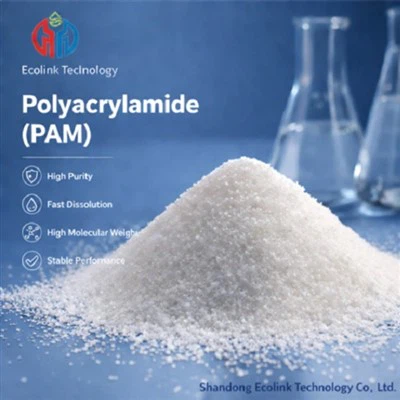
Before we dive into how APAM works in different water qualities, let’s quickly go over what it actually is. Anionic polyacrylamide is a water – soluble polymer with negatively charged groups on its molecular chain. It’s widely used in water treatment, oil recovery, and other industries because of its excellent flocculation, thickening, and stabilizing properties.
APAM in Freshwater
Freshwater is the most common type of water we deal with, and APAM has some great applications here. In freshwater treatment plants, APAM is often used to remove suspended solids, turbidity, and some organic matter.
When you add APAM to freshwater, the negatively charged groups on its chain can attract positively charged particles in the water. This causes the particles to clump together, forming larger flocs. These flocs are easier to settle or filter out, which helps to clarify the water.
For example, in a small – scale freshwater reservoir used for drinking water supply, we once supplied APAM to a local treatment plant. They were having trouble with high turbidity due to sediment runoff from nearby construction sites. After adding the right amount of APAM, the turbidity dropped significantly within a short time. The flocs formed were large and dense, making it easier for the sedimentation tanks to separate the solids from the water.
The dosage of APAM in freshwater usually depends on the initial turbidity and the type of particles present. Generally, a lower dosage can be used for relatively clean freshwater, while higher dosages may be required for water with high sediment loads.
APAM in Sewage Water
Sewage water is much more complex than freshwater as it contains a variety of contaminants, including organic waste, heavy metals, and pathogens. APAM plays a crucial role in sewage treatment, especially in the primary and secondary treatment stages.
In the primary treatment, APAM helps in the sedimentation of large solid particles. Similar to its action in freshwater, it promotes flocculation, allowing the solids to settle at the bottom of the sedimentation tank. This reduces the amount of suspended solids in the sewage, making the subsequent treatment processes more effective.
During the secondary treatment, which often involves biological processes, APAM can help in the separation of sludge. The polymer can bind the microbial flocs together, making them easier to separate from the treated water. This improves the efficiency of sludge thickening and dewatering.
I remember a sewage treatment plant that was struggling with sludge dewatering. The sludge was too difficult to separate from the water, and the treatment process was slow. After we recommended using our APAM, the sludge became more compact, and the water content in the dewatered sludge decreased significantly. This saved the plant a lot of time and money in the long run.
However, when using APAM in sewage water, we need to be careful about the pH level. Sewage water can have a wide range of pH values, and APAM works best in a certain pH range. If the pH is too acidic or too alkaline, the performance of APAM may be affected. So, we usually recommend adjusting the pH before adding APAM.
APAM in Saltwater
Saltwater, such as seawater or brackish water, has high salt content, which can pose some challenges for APAM. The presence of salts in the water can interfere with the flocculation process. The ions in the salt can compete with the charged groups on the APAM molecule for the particles in the water.
But don’t worry, APAM can still be effective in saltwater under the right conditions. First of all, we need to select the appropriate molecular weight and charge density of APAM. A higher – molecular – weight APAM with a suitable charge density can overcome the interference of salts to some extent.
In desalination plants, for example, APAM is used to pretreat the seawater. It helps to remove suspended solids and colloids, which can foul the reverse – osmosis membranes. One of our clients in a coastal desalination plant was having problems with membrane fouling. After using our specially formulated APAM for saltwater treatment, the fouling rate decreased, and the membrane lifespan was extended.
Another application of APAM in saltwater is in aquaculture. In marine fish and shrimp farms, APAM can be used to improve water quality. It helps to remove organic debris and suspended particles, creating a healthier environment for the aquatic organisms.
Impact of Temperature on APAM Performance
Temperature also plays an important role in how APAM performs in different water qualities. Generally, higher temperatures can increase the reaction rate of APAM with the particles in the water. At higher temperatures, the molecular movement is more active, which means that the polymer can interact with the particles more effectively.
However, extremely high temperatures can also cause the degradation of APAM. The polymer chains may break down, reducing its flocculation ability. On the other hand, at lower temperatures, the performance of APAM may be slower. The flocculation process may take longer, and the formed flocs may be smaller and less dense.
For example, in winter, when the water temperature is low, we may need to increase the dosage of APAM slightly to achieve the same level of flocculation as in summer. But we also need to monitor the water conditions closely to ensure that we’re not overdosing the polymer.
Conclusion
As you can see, anionic polyacrylamide is a versatile polymer that can perform well in different water qualities. Whether it’s freshwater, sewage water, or saltwater, APAM has unique applications and can help solve a variety of water – related problems.
Polyacrylamide Emulsion If you’re dealing with water treatment issues in your industry, whether it’s a small – scale water supply system or a large – scale industrial wastewater treatment plant, APAM could be the solution you’ve been looking for. I’d love to have a chat with you about your specific needs and how our APAM products can fit into your water treatment process. So, don’t hesitate to reach out to start a conversation about purchasing APAM.
References
- "Water Treatment Chemicals" by lan Clifford
- "Polymer Science and Technology" by Charles E. Carraher Jr.
Shandong Ecolink Technology Co., Ltd.
Shandong Ecolink Technology Co., Ltd. is one of the most reliable anionic polyacrylamide manufacturers and suppliers in China. We warmly welcome you to wholesale bulk high quality anionic polyacrylamide from our factory. If you have any enquiry about cooperation, please feel free to email us.
Address: No. 8, Xiaying Chemical Industry Park, Aobu Road, Xiaying Town, Changyi City, Weifang City, Shandong Province,China
E-mail: sale02@ecolink-environment.com
WebSite: https://www.ecolink-environment.com/
