Iron sulfide, a compound with significant potential in environmental pollution treatment, has drawn increasing attention in recent years. As a supplier of iron sulfide – environmental pollution treatment chemicals, I’ve deeply explored its stability under different environmental conditions and how this affects its efficacy in pollution treatment. Iron Sulfide- Environmental Pollution Treatment Chemicals
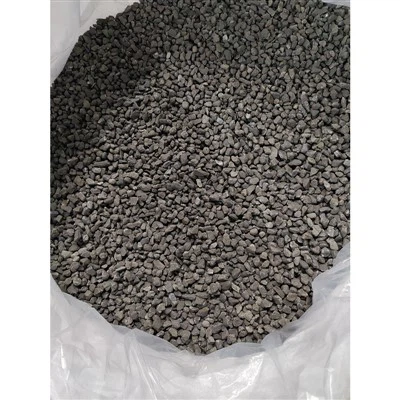
The Role of Iron Sulfide in Environmental Pollution Treatment
Iron sulfide (FeS) plays a multifaceted role in environmental pollution treatment. It is a strong reducing agent, capable of reacting with various pollutants in soil, water, and air. For example, in the remediation of heavy – metal – contaminated soils, FeS can react with heavy metal ions such as lead (Pb²⁺), cadmium (Cd²⁺), mercury (Hg²⁺), etc. Through precipitation and adsorption reactions, the heavy metals are immobilized in the soil, reducing their bioavailability and potential harm to the environment and organisms.
In water treatment, FeS is used to remove pollutants like hexavalent chromium (Cr(VI)). The sulfide ions in FeS can reduce Cr(VI), a highly toxic and mobile form of chromium, to trivalent chromium (Cr(III)), which is less toxic and more likely to precipitate out of the water. Additionally, FeS can also react with other oxidizing pollutants in water, such as nitrate and perchlorate, helping to reduce their concentrations.
Stability of Iron Sulfide under Different Environmental Conditions
1. pH Conditions
The pH of the environment has a profound impact on the stability of iron sulfide. Under acidic conditions (low pH), iron sulfide is relatively unstable. The hydrogen ions (H⁺) in the acidic solution can react with the sulfide ions (S²⁻) in FeS to form hydrogen sulfide gas (H₂S) as follows:
FeS + 2H⁺ → Fe²⁺+ H₂S↑
This reaction not only causes the decomposition of FeS but also releases the potentially harmful H₂S gas. In pollution – treatment scenarios with acidic media, the rapid decomposition of FeS may limit its long – term effectiveness.
On the other hand, under alkaline conditions (high pH), FeS is more stable in terms of avoiding the reaction with H⁺. However, the presence of strong oxidants in alkaline solutions can still oxidize FeS. For example, in the presence of dissolved oxygen, FeS can be gradually oxidized to form iron oxides and sulfur – containing compounds, which may change its chemical properties and reduce its ability to treat pollutants.
2. Redox Conditions
The redox potential of the environment is another crucial factor affecting the stability of iron sulfide. In a reducing environment, FeS is relatively more stable. The low redox potential inhibits the oxidation of FeS. For example, in anaerobic soil environments where the oxygen content is low, FeS can maintain its structure and reactivity for a longer time.
Conversely, in an oxidizing environment, FeS is prone to oxidation. Dissolved oxygen in water is a common oxidant. When FeS is exposed to an oxygen – rich environment, a series of oxidation reactions will occur. First, the sulfide in FeS is oxidized to elemental sulfur (S), and then further oxidized to sulfate (SO₄²⁻). The iron in FeS is oxidized from ferrous (Fe²⁺) to ferric (Fe³⁺), which can form iron hydroxides or other iron – containing precipitates. These oxidation processes change the chemical composition and structure of FeS, affecting its ability to treat pollutants.
3. Temperature
Temperature also affects the stability of iron sulfide. Generally, higher temperatures can accelerate chemical reactions. At elevated temperatures, the oxidation rate of FeS in the presence of oxygen is increased. This is because the kinetic energy of molecules and ions increases with temperature, promoting the collision and reaction between FeS and potential oxidants.
In pollution – treatment applications, if the temperature is too high, the rapid decomposition or oxidation of FeS may lead to a shorter lifespan of the chemical in the treatment system. On the contrary, at lower temperatures, the reaction rate is slower, and FeS may maintain its stability for a longer time, but the treatment process may also be slower.
4. Presence of Other Chemicals
The presence of other chemicals in the environment can have complex effects on the stability of iron sulfide. For example, some metal ions can catalyze the oxidation of FeS. Copper ions (Cu²⁺), for instance, can act as catalysts in the oxidation reaction of FeS by oxygen, accelerating its decomposition.
On the other hand, some anions may form complexes with iron or sulfide ions, which can either enhance or reduce the stability of FeS. For example, the presence of carbonate ions (CO₃²⁻) may form carbonate – containing iron compounds, which can affect the solubility and reactivity of FeS.
Implications for Pollution Treatment
The stability of iron sulfide under different environmental conditions has significant implications for its application in pollution treatment. In practical applications, the environmental conditions of the pollution site need to be carefully evaluated. For example, if the soil or water is acidic, measures should be taken to adjust the pH to a more suitable range to prevent the rapid decomposition of FeS.
In an oxidizing environment, such as an aerobic water treatment system, it may be necessary to add reducing agents or create a local reducing environment to maintain the stability of FeS. Temperature control may also be required in some cases, especially in industrial pollution – treatment processes where high – temperature conditions may be encountered.
Our Offer as an Iron Sulfide Supplier
As a supplier of iron sulfide – environmental pollution treatment chemicals, we understand the importance of the stability of our products under different environmental conditions. We have conducted extensive research and development to produce high – quality iron sulfide with enhanced stability.

Our iron sulfide products are carefully formulated to resist oxidation and decomposition under a wide range of environmental conditions. We can provide customized solutions based on the specific environmental conditions of our customers’ pollution – treatment sites. Whether it is a high – pH soil remediation project or a low – temperature water treatment application, we can offer the appropriate iron sulfide products to ensure effective pollution treatment.
Iron Sulfide- Environmental Pollution Treatment Chemicals If you are facing environmental pollution problems and are considering using iron sulfide for treatment, we are here to help. Our team of experts can provide you with in – depth technical support and advice on how to use our products effectively. We invite you to contact us for a detailed discussion on your pollution – treatment needs and how our iron sulfide products can meet them.
References
- Doelsch, E., Cyvin, B. N., & Madejová, J. (2013). Iron Sulfides in Environmental Geochemistry. Springer.
- Poulton, S. W., & Canfield, D. E. (2011). Formation of iron sulfides in marine sediments. Chemical Reviews, 111(11), 6334 – 6361.
- Peiffer, S., Charlet, L., & Persson, P. (2009). Oxidation of FeS nanoparticles by O2 in aqueous solution. Environmental Science & Technology, 43(17), 6670 – 6676.
Yunfu Fuliu Mineral Materials Co., Ltd.
We are one of the most reliable iron sulfide- environmental pollution treatment chemicals suppliers in China, specialized in providing high quality customized products. Welcome to wholesale bulk iron sulfide- environmental pollution treatment chemicals in stock here from our factory. If you have any enquiry about free sample, please feel free to email us.
Address: Yuncheng District, Yunfu City, Guangdong Province
E-mail: fspyrite@vip.126.com
WebSite: https://www.fuliupyrite.com/
