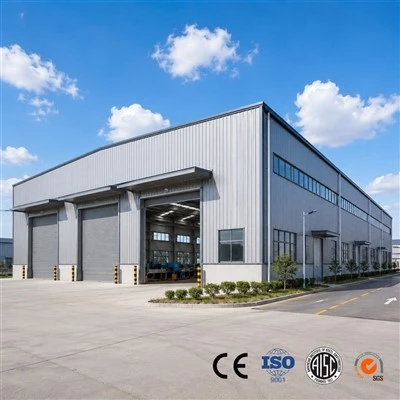
As a supplier of Steel Workshop Buildings, I’ve witnessed the critical importance of maintaining good air quality in these industrial settings. Steel workshops are often bustling hubs of activity, where various processes like welding, cutting, and casting take place. These operations can release a plethora of pollutants into the air, posing risks to the health of workers and the overall efficiency of the workshop. In this blog, I’ll share some practical strategies to ensure the air quality in a steel workshop building. Steel Workshop Buildings
Understanding the Pollutants in Steel Workshops
Before delving into solutions, it’s essential to understand the types of pollutants commonly found in steel workshops. One of the most significant pollutants is particulate matter (PM). Welding and cutting operations generate fine metal particles that can be easily inhaled by workers. These particles can cause respiratory problems, including bronchitis and lung cancer, over time.
Another major pollutant is fumes. Welding fumes, for example, contain a complex mixture of metal oxides, fluorides, and silicates. These fumes can cause irritation to the eyes, nose, and throat, and long – term exposure can lead to more severe health issues such as metal fume fever.
Gases are also a concern. Carbon monoxide (CO), produced during incomplete combustion processes, is a colorless and odorless gas that can be extremely dangerous. It binds to hemoglobin in the blood, reducing the oxygen – carrying capacity and potentially leading to asphyxiation. Nitrogen oxides (NOx) and sulfur dioxide (SO2) are also released during certain steel – making processes, contributing to air pollution and having adverse effects on human health.
Ventilation Systems
An effective ventilation system is the cornerstone of maintaining good air quality in a steel workshop. There are two main types of ventilation systems: natural ventilation and mechanical ventilation.
Natural ventilation relies on the movement of air through openings such as windows, doors, and vents. This can be a cost – effective solution, especially in smaller workshops. By positioning openings strategically, you can take advantage of wind and temperature differences to create a flow of fresh air through the workshop. For example, placing vents on the windward side of the building to allow fresh air to enter and exhaust vents on the leeward side to expel polluted air can be an efficient way of natural ventilation.
However, in large steel workshops, natural ventilation may not be sufficient to remove pollutants effectively. This is where mechanical ventilation systems come in. Exhaust fans can be installed near the source of pollution, such as welding stations. These fans draw the polluted air away from the workers and expel it outside the building. Supply fans can also be used to bring in fresh air from the outside.
A well – designed mechanical ventilation system should have appropriate airflow rates. The airflow rate depends on the size of the workshop, the number of workers, and the type of processes being carried out. For example, in a welding area, the recommended airflow rate is typically around 100 – 150 cubic feet per minute per welder.
Air Filtration
In addition to ventilation, air filtration is crucial for removing pollutants from the air in a steel workshop. There are several types of air filters available, each with its own advantages and disadvantages.
High – Efficiency Particulate Air (HEPA) filters are very effective at removing fine particles, including the metal particles generated in steel workshops. These filters can capture particles as small as 0.3 microns with an efficiency of 99.97%. HEPA filters are commonly used in areas where the air quality needs to be extremely clean, such as in precision machining areas.
Activated carbon filters are designed to remove gases and odors. They work by adsorbing the pollutants onto the surface of the carbon. In a steel workshop, activated carbon filters can be used to remove gases like carbon monoxide, nitrogen oxides, and sulfur dioxide.
Electrostatic precipitators are another option for air filtration. They use an electrostatic charge to attract and collect particles from the air. Electrostatic precipitators are particularly effective for large – scale industrial applications, as they can handle high – volume airflows.
Source Control
While ventilation and air filtration are important, source control is the most effective way to reduce air pollution in a steel workshop. By minimizing the generation of pollutants at the source, you can significantly improve the air quality.
One way to achieve source control is through the use of advanced welding techniques. For example, using gas – metal arc welding (GMAW) with a shielded gas can reduce the production of welding fumes compared to other welding methods. Additionally, maintaining proper equipment maintenance and calibration can ensure that processes are carried out efficiently, reducing the generation of pollutants.
Another source control measure is the use of local exhaust ventilation at the point of pollutant generation. For example, a welding fume extractor can be placed close to the welding torch to capture the fumes as they are generated. This prevents the fumes from spreading into the workshop environment.
Worker Training and Safety Measures
Worker training is an essential part of ensuring air quality in a steel workshop. Workers should be educated about the health risks associated with air pollutants in the workshop and the importance of using personal protective equipment (PPE).
PPE such as respirators should be provided to workers, especially those working in areas with high levels of pollutants. Respirators can filter out harmful particles and gases, protecting the workers’ respiratory systems. Workers should be trained on how to properly fit, use, and maintain their respirators.
Regular health monitoring of workers is also important. This can involve periodic medical check – ups to detect any early signs of health problems related to air pollution exposure.
Monitoring and Maintenance
Monitoring the air quality in a steel workshop is crucial to ensure that the air quality management strategies are effective. Air quality monitoring can involve the use of sensors to measure the concentration of pollutants such as particulate matter, gases, and fumes.
Regular maintenance of ventilation systems and air filtration equipment is also essential. Filters should be replaced regularly to ensure their efficiency, and fans and ducts should be inspected and cleaned to prevent blockages.
Conclusion
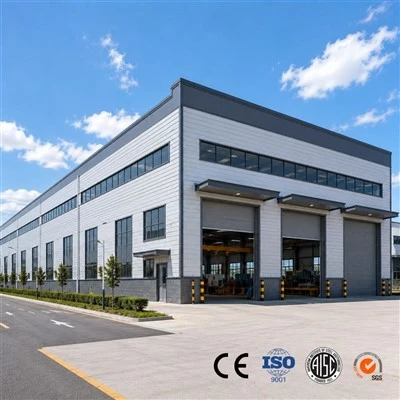
Ensuring the air quality in a steel workshop building is a multi – faceted challenge that requires a comprehensive approach. By implementing effective ventilation systems, air filtration, source control measures, worker training, and regular monitoring and maintenance, you can create a safe and healthy working environment in your steel workshop.
Steel Warehouse As a Steel Workshop Buildings supplier, I understand that every workshop is unique, and the solutions need to be tailored to the specific needs of the facility. If you are interested in improving the air quality in your steel workshop or sourcing a high – quality steel workshop building, I encourage you to reach out. Our team of experts can provide you with customized solutions and guidance to meet your requirements. Contact us to start a discussion about your project and take the first step towards a cleaner and safer working environment.
References
- American Conference of Governmental Industrial Hygienists (ACGIH). "Threshold Limit Values (TLVs) for Chemical Substances and Physical Agents and Biological Exposure Indices (BEIs)".
- Occupational Safety and Health Administration (OSHA). "Standards and Guidance for Air Quality in Industrial Workplaces".
- National Institute for Occupational Safety and Health (NIOSH). "Recommendations for Air Quality Management in Steel Manufacturing".
Liaoning Zhongbei Steel Structure Engineering Co., Ltd.
Liaoning Zhongbei Steel Structure Engineering Co., Ltd. is one of the most professional steel workshop buildings manufacturers and suppliers in China, also supports customized service. We warmly welcome you to buy advanced steel workshop buildings made in China here from our factory. Also, quotation is available.
Address: No. 239 – 1, Shenbei West Road, Yuhong District, Shenyang, Liaoning.
E-mail: Info@cnssgroup.cn
WebSite: https://www.cnssprefabbuildings.com/
