Hey there! I’m a supplier of Ammonium Citrate Monobasic, and I’m super stoked to share with you how to grow those beautiful Ammonium Citrate Monobasic crystals. It’s not only a cool science experiment but also has some practical uses. So, let’s dive right in! Ammonium Citrate Monobasic
What is Ammonium Citrate Monobasic?
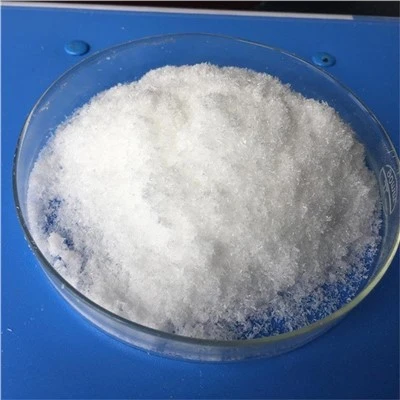
First off, let’s talk a bit about what Ammonium Citrate Monobasic is. It’s a chemical compound with the formula NH₄HC₆H₅O₇. It’s commonly used in food and beverage industries as an acidity regulator, and also in some analytical chemistry applications. It’s a white, crystalline powder that can form some really neat crystals under the right conditions.
Why Grow Ammonium Citrate Monobasic Crystals?
You might be wondering, why bother growing these crystals? Well, for one, it’s a fun and educational activity. It’s like a little science project you can do at home or in a lab. Plus, the crystals are really pretty, and they can be used for decorative purposes if you want. And if you’re in the business like me, it can also help you understand the product better and show off its quality to potential customers.
Materials You’ll Need
Before we start growing the crystals, let’s gather the materials. You’ll need:
- Ammonium Citrate Monobasic powder (of course, I can supply you with high – quality stuff!)
- Distilled water
- A clean glass container (like a beaker or a jar)
- A stirring rod
- A piece of string or a seed crystal (more on this later)
- A filter paper (optional)
Step 1: Prepare the Solution
The first step is to make a saturated solution of Ammonium Citrate Monobasic. Here’s how you do it:
- Fill your glass container with distilled water. The amount of water depends on how many crystals you want to grow. For a small experiment, about 100 – 200 ml should be enough.
- Start adding the Ammonium Citrate Monobasic powder to the water, a little at a time. Stir the solution with the stirring rod after each addition. Keep adding the powder until no more of it can dissolve in the water. This is what we call a saturated solution. You’ll know it’s saturated when you see some powder sitting at the bottom of the container that won’t dissolve, even after a lot of stirring.
- If there are any undissolved particles or impurities in the solution, you can use a filter paper to filter it. This will give you a cleaner solution and better – looking crystals.
Step 2: Choose a Seed Crystal (Optional but Recommended)
A seed crystal is a small piece of the crystal that you use to start the growth process. It gives the other molecules something to attach to and form a larger crystal. You can either buy a seed crystal or make one yourself. To make a seed crystal, let a small amount of the saturated solution evaporate on a flat surface. Once the water has evaporated, you’ll be left with some small crystals. Pick one of the nicest – looking ones to use as your seed crystal.
Step 3: Hang the Seed Crystal
If you’re using a seed crystal, tie it to a piece of string. Then, suspend the string in the saturated solution so that the seed crystal is fully submerged. Make sure the string is attached to something stable, like a pencil placed across the top of the container. This will keep the seed crystal in place as the crystals grow.
Step 4: Let the Crystals Grow
Now comes the waiting part. Place the container in a cool, undisturbed place. As the water in the solution evaporates, the Ammonium Citrate Monobasic molecules will start to come out of the solution and attach to the seed crystal (if you’re using one) or form new crystals on their own. This process can take anywhere from a few days to a couple of weeks, depending on the conditions.
Step 5: Monitor and Care for the Crystals
While the crystals are growing, it’s important to keep an eye on them. Check the solution regularly to make sure there’s still enough water. If the solution gets too low, you can add a little more distilled water to keep the crystal growing. Also, make sure the container is in a place where it won’t be bumped or shaken, as this can disrupt the crystal growth.
Step 6: Harvest the Crystals
Once the crystals have reached the size you want, it’s time to harvest them. Carefully remove the string with the crystal attached (if you used a seed crystal) from the solution. Let the crystal dry on a paper towel for a few hours. You can then store the crystal in a dry, clean container.
Tips for Growing Great Crystals
- Use distilled water: Tap water can contain impurities that can affect the crystal growth. Distilled water is pure and will give you better – looking crystals.
- Keep the solution clean: Make sure your container and stirring rod are clean before you start. Any dirt or debris can act as a nucleation site and cause the crystals to grow in an irregular way.
- Control the temperature: Crystals grow best in a cool, stable environment. Avoid placing the container in direct sunlight or near a heat source, as this can cause the water to evaporate too quickly and result in smaller, less – well – formed crystals.
Applications of Ammonium Citrate Monobasic Crystals
As I mentioned earlier, Ammonium Citrate Monobasic has some practical applications. In the food industry, it’s used to adjust the acidity of products like jams, jellies, and soft drinks. In analytical chemistry, it can be used as a buffer solution. And of course, the crystals themselves can be used for decorative purposes or as part of a science display.
Contact Me for Your Ammonium Citrate Monobasic Needs
Sodium Acetate If you’re interested in growing your own Ammonium Citrate Monobasic crystals or need a reliable supplier for your business, I’m here to help. I offer high – quality Ammonium Citrate Monobasic at competitive prices. Whether you’re a hobbyist or a professional, I can provide you with the right amount of product for your needs. Just reach out to me, and we can discuss your requirements and start a great business relationship.
References
- "Handbook of Food Additives", Second Edition, edited by A. L. Branen, P. M. Davidson, and S. Salminen.
- "Analytical Chemistry", Seventh Edition, by Douglas A. Skoog, F. James Holler, and Stanley R. Crouch.
Jiangsu Kolod Food Ingredients Co., Ltd.
As one of the most professional ammonium citrate monobasic manufacturers and suppliers in China, we’re featured by quality products and good price. Please rest assured to wholesale bulk ammonium citrate monobasic made in China here and get free sample from our factory. Customized orders are welcome.
Address: South Side of Weier Road, Guanyun Development Zone, Lianyungang City, Jiangsu Province, China
E-mail: sales1399@jskolod.com
WebSite: https://www.kolod-group.com/
